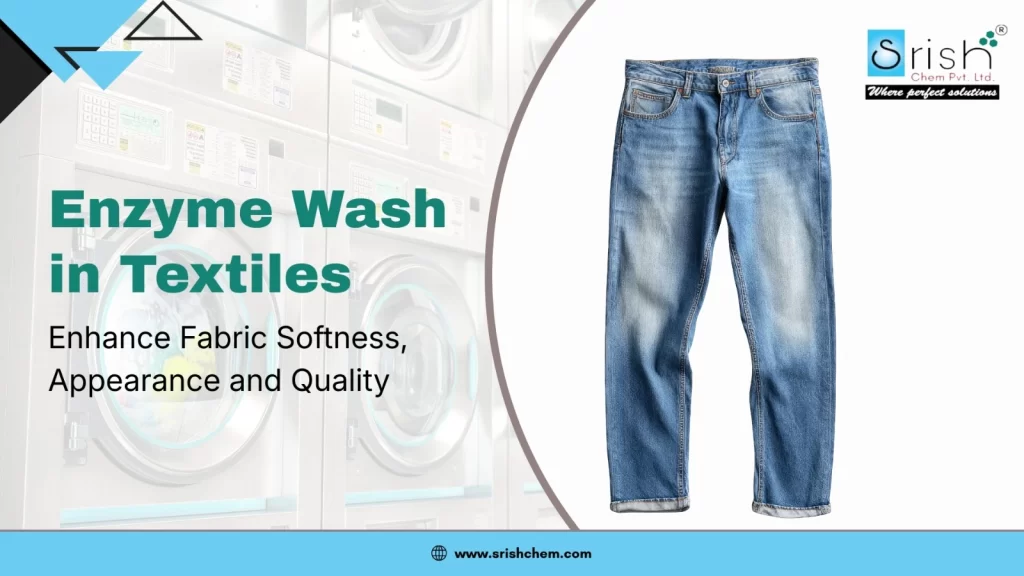
Enzyme wash has become a popular finishing method in the textile industry, offering a natural and effective way to enhance fabric quality. By using cellulase enzymes, this process gently removes surface fuzz and microfibers, improving both the look and feel of fabrics. It is widely used for cotton and cellulosic garments where softness, appearance, and durability are critical factors for premium products.
What is Enzyme Wash?
Enzyme wash is a controlled wet processing technique that uses cellulase enzymes to partially break down cellulose fibers on the fabric surface. This action removes protruding microfibers, resulting in smoother, softer, and cleaner textiles. Unlike chemical treatments, enzyme wash is gentle on fabrics while providing high-quality finishes suitable for casual and premium apparel.
Objectives of Enzyme Wash
Softness and Comfort
The primary aim of enzyme wash is to enhance the tactile feel of fabrics. Treated textiles feel softer, smoother, and more comfortable, which is highly valued in garments like t-shirts, denim, and casual wear.
Reduction of Fuzz and Pilling
Enzyme wash eliminates surface microfibers that often cause fuzz and pilling. This ensures garments retain a uniform texture for longer, improving their overall durability and reducing complaints from end-users.
Improved Appearance
The enzymatic treatment subtly refines the fabric surface, producing a polished, high-quality look. Mild color fading may occur, adding a stylish, worn-in appearance desirable in denim and casual clothing.
Enhanced Commercial Value
Soft, smooth fabrics with a premium feel increase the perceived value of garments. Many apparel brands specify enzyme wash as part of their finishing requirements to meet quality standards.
Shrinkage Control
Enzyme wash helps stabilize fabric dimensions, reducing post-wash shrinkage and ensuring consistent garment sizing.
Step-by-Step Enzyme Wash Process
1. Desizing
Desizing removes sizing materials like starch or PVA from the fabric surface. Detergents, wetting agents, or mild enzymes (such as amylase) are used to prepare the fabric for the main enzymatic treatment.
2. Enzyme Treatment
Cellulase enzymes are applied under controlled conditions:
- Temperature: 40–55°C
- Time: 20–40 minutes
- pH: 4.5–5.5
Agitation ensures uniform contact between enzymes and fibers. The enzymes break down protruding microfibers, resulting in a smoother fabric surface.
3. Rinsing
Hot and cold rinses deactivate remaining enzymes and remove loosened fibers. Proper rinsing is essential to prevent further degradation and maintain fabric strength.
4. Softener Application
Cationic or non-ionic softeners are applied to enhance hand feel and lubricate fibers, providing a soft, supple texture.
5. Hydro Extraction & Drying
Moisture is removed using a hydro extractor followed by tumble or hang drying, depending on fabric type and desired finish. This step ensures dimensional stability and final softness.
Types of Enzyme Wash
- Bio-Polish (Heavy Enzyme Wash): Aggressive treatment that removes surface hairiness and enhances fabric clarity and drape.
- Bio-Wash (Light Enzyme Wash): Gentle treatment that smooths the fabric without excessive fiber removal.
- Acidic or Neutral Enzyme Systems: Chosen based on fabric type and process requirements. Acidic systems are commonly used for cotton, while neutral systems suit blends or sensitive fabrics.
Critical Control Points
- Maintain precise temperature and pH for optimal enzyme activity.
- Avoid over-processing to prevent fiber weakening or surface damage.
- Monitor color fading, particularly for dark or reactive-dyed fabrics.
- Ensure complete enzyme deactivation before drying to preserve fabric integrity.
Materials Used in Enzyme Wash
- Cellulase Enzyme: Active ingredient responsible for surface fiber modification.
- Detergents & Wetting Agents: Aid in desizing and enzyme distribution.
- Buffer Solution: Maintains proper pH for enzyme activity.
- Softener: Enhances fabric hand feel and smoothness.
- Water: Used in washing and rinsing stages.
Benefits of Enzyme Wash
- Enhances softness and tactile comfort
- Reduces pilling and fuzz for a smoother finish
- Produces cleaner, polished fabric appearance
- Improves dimensional stability and reduces shrinkage
- Meets industry standards and buyer expectations
Eco-Friendly Advantages
Enzyme wash is an environmentally friendly alternative to traditional stone washing or harsh chemical treatments. It uses less water, lower energy, and biodegradable enzymes, making it a sustainable solution for textile finishing.
Conclusion
Enzyme wash is a highly effective finishing process that improves fabric softness, appearance, and durability. By controlling enzyme activity, temperature, and pH, manufacturers can achieve consistent, premium-quality fabrics that satisfy both buyers and consumers. Its eco-friendly nature and ability to produce smooth, refined fabrics make enzyme wash a preferred choice in modern textile production.