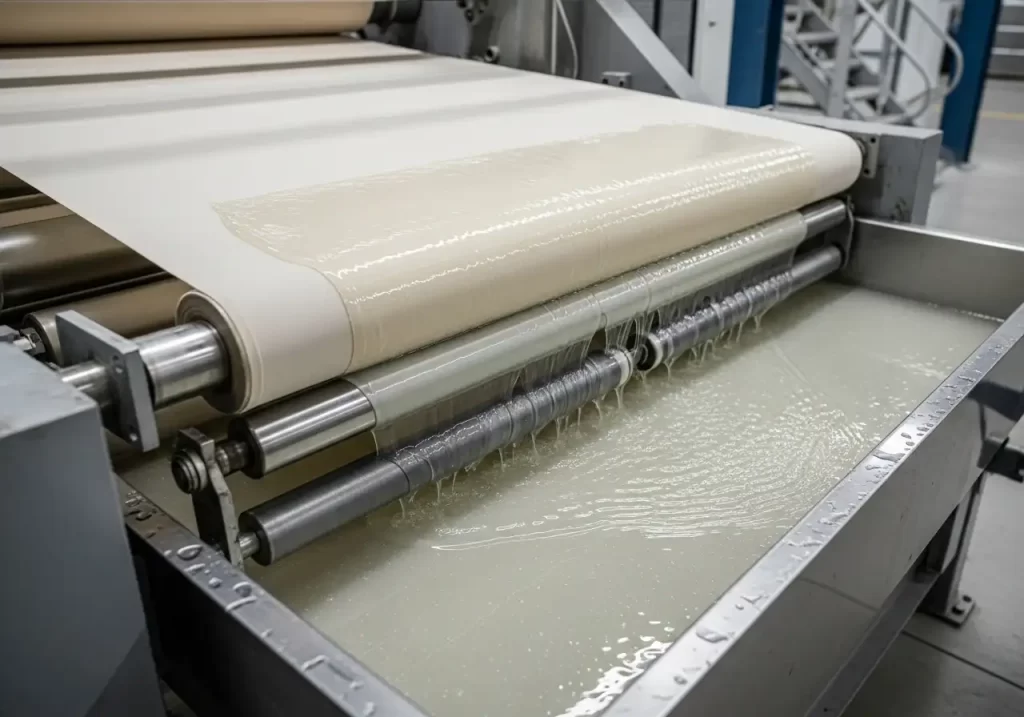
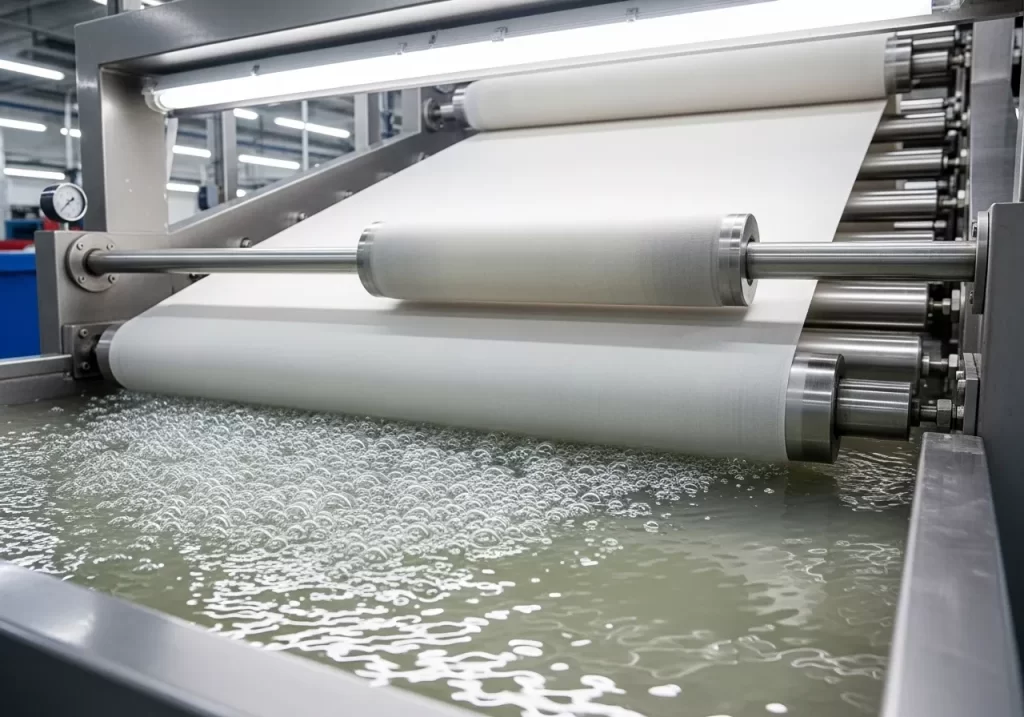
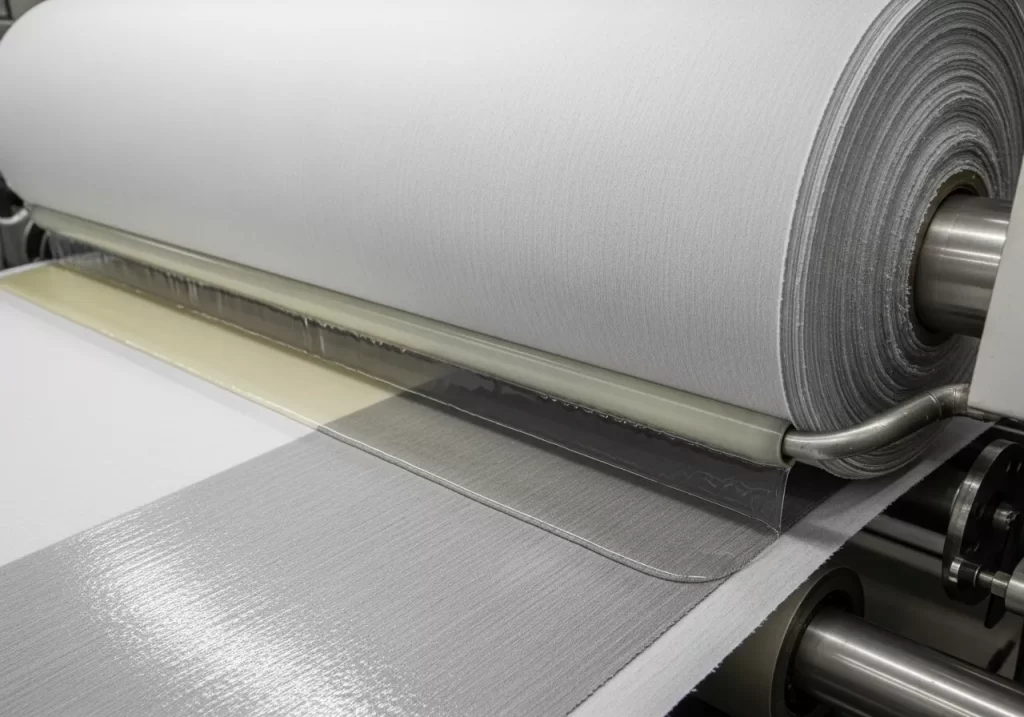
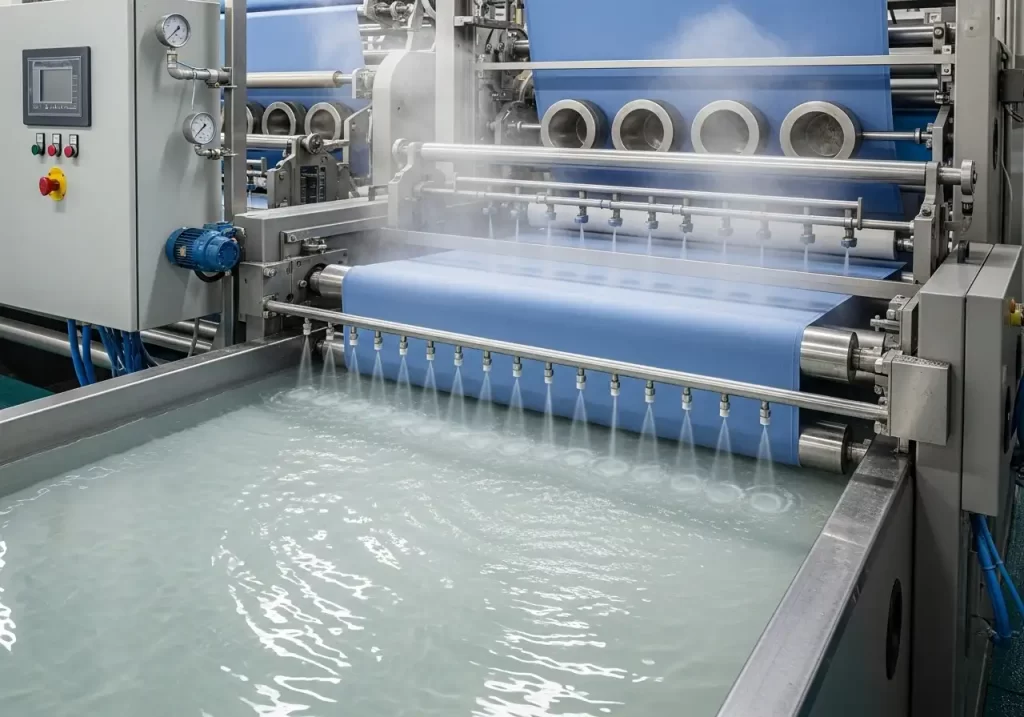
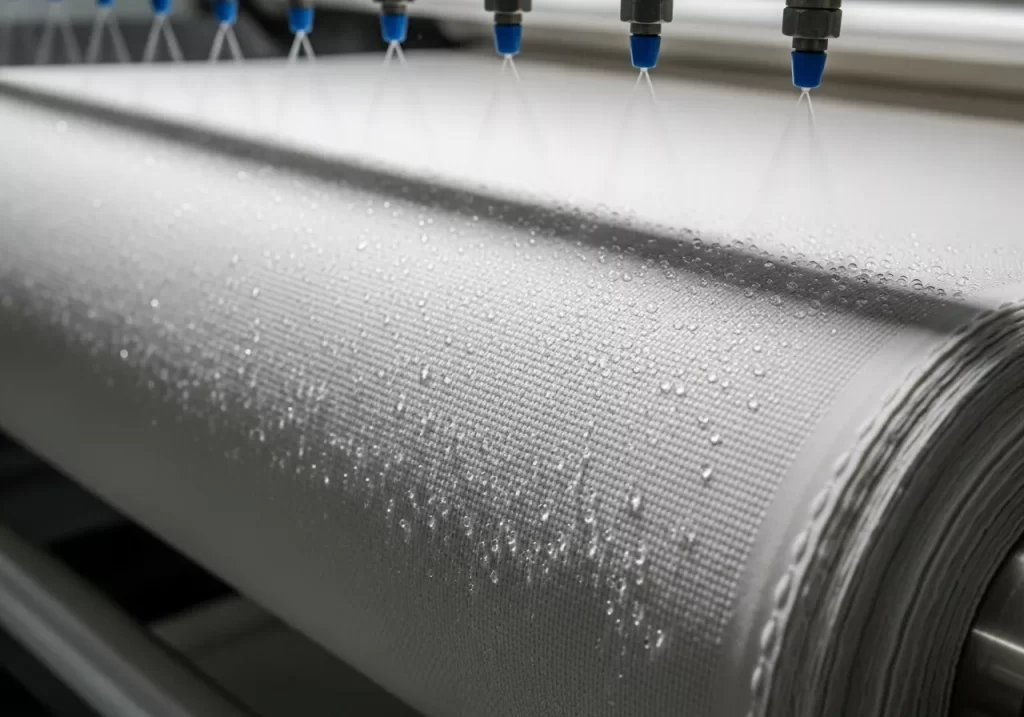
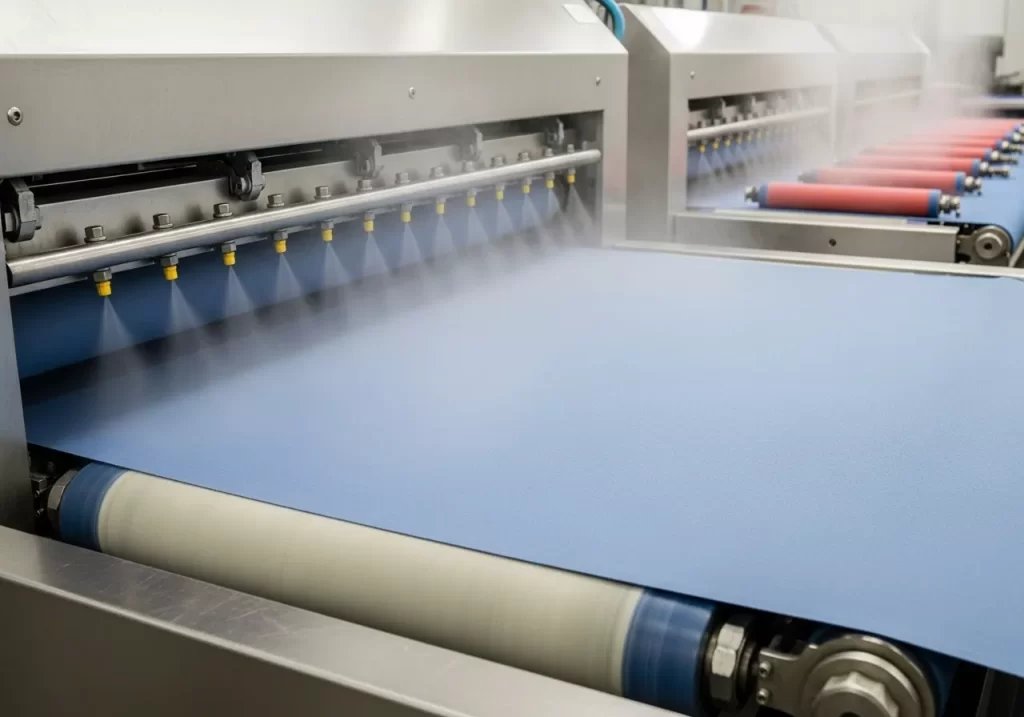
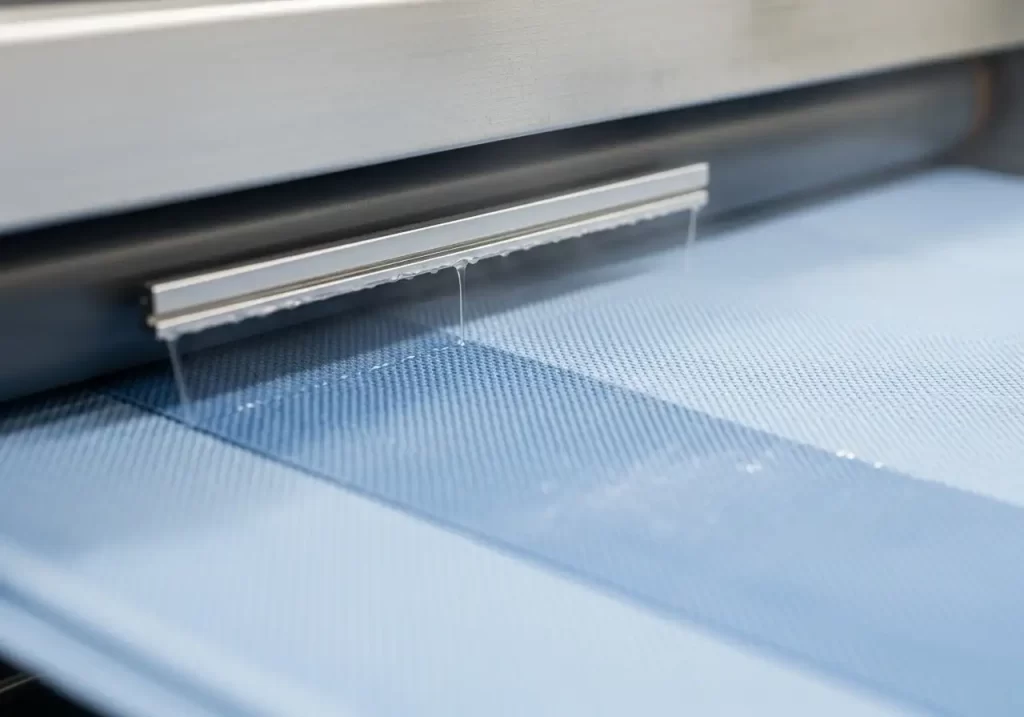
The finishing process is where textiles gain their distinctive character, feel, and functionality. Our advanced range of finishing chemicals is designed to impart specific properties—from luxurious softness and crisp stiffness to water repellency and wrinkle resistance—transforming raw fabric into high-value, market-ready products.
Comprehensive Finishing Process Chemicals
PVA Solution (Polysol)
A synthetic polymer (Polyvinyl Alcohol) used to impart a crisp, firm, and full hand feel to fabrics, often for specific fabric constructions or to improve weaving performance.
Softener
Provides a smooth, soft, and pleasant touch to fabrics, enhancing comfort and drape. Available in various chemistries (cationic, non-ionic, anionic) to suit different fiber types and desired finishes.
Silicone Emulsion
Delivers a superior, durable soft hand feel, improved drape, elasticity, and often enhances tear strength and abrasion resistance, providing a luxurious finish.
Stiffener
Agents (e.g., resins, starches) used to impart desired stiffness, body, and fullness to fabrics, which is crucial for specific garments, industrial textiles, or interlinings.
Cationic Finishing Agent
Often used to improve dye fastness on anionic dyes, provide a softer hand, or act as a base for subsequent anionic treatments, modifying the fabric surface properties.
Water Repellent Agent
Imparts a durable water-repellent finish to fabrics, making them resistant to water penetration while often maintaining breathability for functional textiles.
Wrinkle Free Finish
Resins that chemically modify cellulosic fibers to provide excellent wrinkle recovery properties, significantly reducing the need for ironing and maintaining garment appearance.
Anti-static Agent
Reduces or eliminates static electricity accumulation on synthetic fibers, improving wearer comfort, preventing fabric clinging, and aiding in processing efficiency.
Lubricant
Applied to improve sewing ability, reduce needle damage, and minimize abrasion on the fabric surface during cutting and garment manufacturing, enhancing processability.
Optical Brightener
Absorbs ultraviolet (UV) light and re-emits it as visible blue light, making white fabrics appear whiter and brighter, and enhancing the vibrancy of colored textiles.
White R
Generally refers to a reducing agent used in textile processing. It is often employed to clear unfixed dyes or for reductive bleaching, leading to a cleaner, brighter white appearance on fabrics.