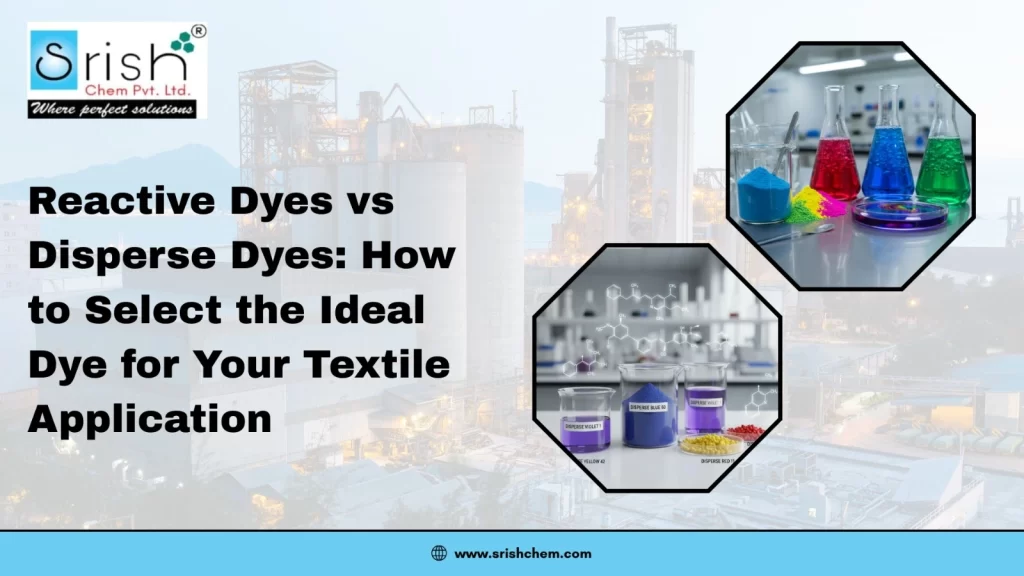
Choosing the right dye in textile manufacturing is not just a matter of color—it’s a strategic decision. The type of dye impacts fabric quality, durability, fastness properties, and environmental sustainability. Among the most commonly used dyes are reactive dyes and disperse dyes. Both offer vibrant colors, but their chemical nature, fixation mechanism, and processing requirements differ significantly. This article explores these differences, helping textile professionals select the optimal dye for their specific applications.
Understanding Reactive Dyes
What Are Reactive Dyes?
Reactive dyes are water-soluble anionic dyes that bond chemically with fibres. This covalent attachment ensures that the color is permanent, vibrant, and resistant to washing.
Chemical Structure and Properties
Reactive dyes contain reactive groups such as dichlorotriazine or vinyl sulfone. These groups react with hydroxyl or amino groups in fibres, making them ideal for cellulosic fibres like cotton and viscose, and adaptable for protein fibres like wool and silk under controlled conditions.
Fixation Mechanism
The strength of reactive dyes comes from covalent bonding. Once the dye reacts with the fibre, it forms a permanent connection that prevents color from washing out.
Fibre Compatibility
- Best suited for: Cotton, viscose, linen
- Controlled application: Wool, silk
- Not recommended for: Hydrophobic synthetic fibres
Processing Conditions
- Temperature: 30–80 °C
- Medium: Alkaline (soda ash or caustic soda)
- Additives: Salt as an exhaustion promoter
- Requires thorough washing after dyeing to remove unfixed dye and prevent bleeding.
Advantages and Limitations
Advantages:
- Excellent wash and perspiration fastness
- Bright, long-lasting colors
- Can be applied at relatively low temperatures
Limitations:
- Sensitive to hydrolysis
- Higher water and salt consumption
- Requires careful washing to avoid unfixed dye issues
Understanding Disperse Dyes
What Are Disperse Dyes?
Disperse dyes are non-ionic, sparingly water-soluble dyes designed for synthetic fibres. They are applied as fine dispersions in water and rely on physical diffusion rather than chemical bonding.
Chemical Structure and Properties
Disperse dyes are hydrophobic, small molecules. Unlike reactive dyes, they do not form chemical bonds but instead penetrate and get trapped in the amorphous regions of fibres like polyester, acetate, and nylon.
Fixation Mechanism
Disperse dyes rely on heat-induced diffusion. During high-temperature dyeing, the dye diffuses into the fibre and becomes trapped as the fibre cools.
Fibre Compatibility
- Best suited for: Polyester, acetate, nylon
- Not suitable for: Cotton or natural fibres
Processing Conditions
- High-temperature dyeing: 130–140 °C
- Low-temperature dyeing: Requires carriers
- Equipment: HT dyeing machines, thermosol, or jet dyeing machinery
Advantages and Limitations
Advantages:
- Good light fastness
- Vibrant colors on synthetic fibres
- Effective for thermoplastic fibres
Limitations:
- Moderate wash fastness
- Risk of sublimation under heat
- Carriers may be environmentally hazardous
Key Differences Between Reactive and Disperse Dyes
Fibre Affinity
- Reactive: Works with cellulosic and protein fibres
- Disperse: Works with synthetic hydrophobic fibres
Temperature Requirements
- Reactive: Low to moderate (30–80 °C)
- Disperse: High (>100 °C) or carrier-assisted low temperature
Fastness Properties
- Reactive: Excellent wash fastness, good light fastness
- Disperse: Moderate wash fastness, good to very good light fastness
Cost and Environmental Impact
Reactive: Higher water and salt consumption
Disperse: High energy usage, carrier hazards
Comparative Overview Table
| Parameter | Reactive Dyes | Disperse Dyes |
| Best Fibre Types | Cotton, viscose, wool, silk | Polyester, acetate, nylon |
| Fixation Mechanism | Covalent bond | Physical diffusion/trapping |
| Processing Temperature | 30–80 °C | 130–140 °C or carrier use |
| Wash Fastness | Excellent | Moderate to good |
| Light Fastness | Good to excellent | Good to very good |
| Cost/Processing | Water and salt intensive | High energy; HT required |
Factors to Consider When Choosing a Dye
Fibre Type
- Natural fibres → Reactive dyes
- Synthetic fibres → Disperse dyes
- Blended fabrics → Dual-dyeing systems
Equipment and Process
- Reactive → Conventional dye vats
- Disperse → High-temperature jet, beam, or thermosol machinery
End-Use Fastness Requirements
- Wash durability → Reactive dyes
- Heat and light exposure → Disperse dyes
Environmental and Cost Considerations
Reactive → Higher water/salt usage
Disperse → High energy consumption, potential carrier hazards
Practical Scenarios for Dye Selection
Dyeing Natural Fibres
Reactive dyes provide deep, permanent colors for cotton, linen, and silk at moderate temperatures.
Dyeing Synthetic Fibres
Disperse dyes ensure vibrant, heat-stable colors for polyester, nylon, and acetate.
Dyeing Blended Fabrics
Blended fabrics, like cotton/polyester, often require dual-dyeing processes, combining reactive and disperse dyes for optimal results.
Tips for Optimizing Dye Performance
- Pre-Treatment: Proper scouring and cleaning ensure uniform dye uptake.
- Dyeing Temperature & Time: Maintain fibre-specific temperature to avoid damage.
- Post-Dyeing Washing: Remove unfixed dye to prevent bleeding and color loss.
Environmental Considerations
- Water Usage: Reactive dye processes consume more water for washing off excess dye.
- Energy Consumption: Disperse dyes need high heat, increasing energy use.
- Sustainable Practices: Recycle water, reduce carrier usage, and adopt eco-friendly dyes.
Common Mistakes and How to Avoid Them
- Skipping pre-treatment → leads to uneven dyeing
- Overheating fibres → causes damage and color degradation
- Insufficient washing → results in dye bleeding and poor wash fastness
Future Trends in Textile Dyeing
- Eco-friendly reactive dyes with less water consumption
- Carrier-free disperse dyeing techniques for energy efficiency
- Precision digital dyeing for consistent color yields
Conclusion
The choice between reactive and disperse dyes is crucial for achieving vibrant, durable, and sustainable textile coloration. Reactive dyes excel in wash fastness and work best with natural fibres, while disperse dyes are optimized for synthetic fibres, offering excellent light fastness. Evaluating fibre type, machinery, processing conditions, and environmental impact allows manufacturers to select the right dye, ensuring superior results while adhering to sustainable practices.