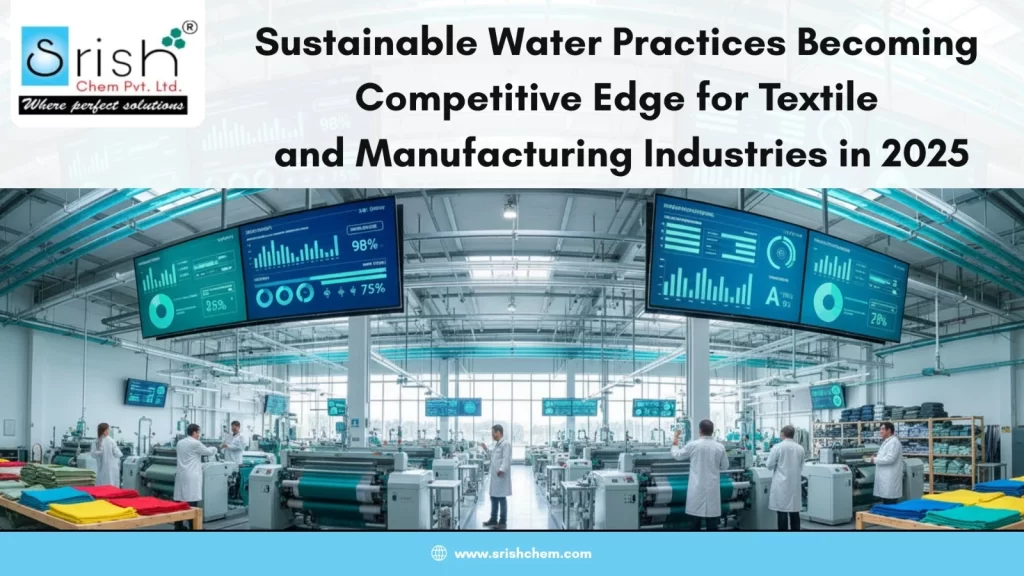
Water — the essence of life — is also the lifeblood of the textile and chemical-manufacturing industry. For firms like Srish Chem, embracing sustainable water management in 2025 is no longer just a matter of corporate responsibility: it is increasingly becoming a competitive differentiator, a business advantage that shapes long-term viability, brand value, cost optimization, and regulatory compliance.
The Water Challenge in Textile & Chemical Manufacturing
Textile production — especially wet processing stages like dyeing, bleaching, and finishing — consumes enormous volumes of water. According to industry analyses, water consumption in such processes is a major burden, while the resulting wastewater is often laden with dyes, salts, and chemicals, which, if discharged untreated, pose grave ecological and community health risks.
For a chemical-supplier and manufacturer like Srish Chem, which likely deals with dyes, auxiliaries or process chemicals for textile mills, the water footprint (both fresh water intake and effluent generated) can be substantial. This makes sustainable water management not just a “nice-to-have,” but a strategic necessity.
Why Water Sustainability Is Emerging as a Differentiator in 2025
1. Regulatory and Market Pressure for Cleaner Water Use
With increased awareness about industrial pollution and environmental degradation, governments and regulators are tightening norms around effluent treatment, water withdrawal, and discharge standards. Moreover, global buyers of textile products — especially from environmentally conscious markets — increasingly demand sustainability. Companies that can demonstrate water stewardship stand a better chance of winning orders and maintaining export relationships.
2. Cost Savings Through Efficiency and Recycling
Sustainable water management is not just about environmental benefit — it can result in substantial cost savings. Techniques such as water reuse/recycling, process optimization, and efficient dyeing technologies reduce fresh water intake and lower effluent treatment costs. According to industry guides, reuse systems (e.g., recycling rinse water, reusing cooling water or dye liquors) can significantly cut water consumption.
3. Innovation & Technology as Competitive Advantage
The textile and chemical-manufacturing industry is witnessing rapid adoption of advanced water-saving technologies: from closed-loop water recycling systems, counter-current washing, low-wet-pickup dyeing/padding, to newer low-water or waterless dyeing methods (e.g., foam-based dyeing, supercritical CO₂ dyeing) that drastically cut or even eliminate water usage for certain processes.
4. Reputation, Brand Value, and Sustainability Storytelling
In 2025, sustainability is no longer limited to internal compliance — it increasingly influences buyers’ and consumers’ choices. Textile brands and manufacturers that can show commitment to environmental care — particularly water conservation — build stronger brand reputation, appeal to eco-conscious markets, and satisfy stakeholder expectations.
As a supplier or partner, Srish Chem aligning with such green values can enhance its brand image — not just as a chemical vendor, but as a sustainability-oriented collaborator.
5. Long-Term Water Security and Risk Mitigation
Water scarcity and regulatory uncertainty pose long-term risks to textile/chemical operations. By investing early in water management — water recycling, wastewater treatment, efficient process chemicals — firms can de-risk their operations, ensure stable supply under resource constraints, and build resilience.
What Sustainable Water Management Looks Like
If Srish Chem were to commit to water sustainability as a differentiator, here are practical steps/approaches it can consider:
- Develop and supply water-efficient chemicals/auxiliaries — chemicals compatible with low-liquor or low-water dyeing, or for improved dye exhaustion, requiring less rinsing; also supplies for efficient wastewater treatment.
- Collaborate with clients to promote water reuse and recycling systems — help mills implement closed-loop water recycling, counter-current washing, or rinse-water reuse systems.
- Offer consultancy/training for water-use optimization — run water audits, use data analytics and process monitoring to identify inefficiencies, optimize process flows, and reduce water waste.
- Support or supply chemicals for advanced dyeing technologies — foam-dyeing, digital printing, or other low-water / waterless technologies becoming more prevalent.
- Ensure environmentally compliant wastewater treatment solutions — advocating for proper effluent treatment, chemical neutralization, water purification or reuse, helping mills meet regulatory/environmental standards.
- Adopt and communicate sustainability credentials — build transparency around water consumption, treatment, and reuse; perhaps partner for certifications (where applicable) to reflect environmental credentials.
Benefits— Why It’s Worth the Commitment
- Competitive edge: By aligning with sustainability trends, Srish Chem becomes a preferred supplier for mills looking to reduce water footprint — opening up new business opportunities.
- Cost savings (indirect): Efficient water use by clients translates to reduced water and effluent treatment costs — which can translate to stronger client relationships and long-term contracts.
- Regulatory and reputational security: As environmental regulations tighten and scrutiny increases, being ahead on water stewardship reduces compliance risk and enhances corporate reputation.
- Future-proofing business: With global trends pushing towards circular economy, water efficiency, and sustainability, early adopters position themselves for long-term relevance.
- Alignment with global sustainability goals: Contributes to broader environmental protection, conserves water resources, supports communities — strengthening corporate social responsibility profile.
Conclusion
In 2025, sustainable water management is emerging as a key differentiator in the textile and manufacturing industry. For a forward-looking firm like Srish Chem, embedding water stewardship into its business strategy is not just ethically responsible — it is commercially prudent. By enabling water-efficient chemical solutions, collaborating on water reuse/recycling systems, and championing environmental responsibility, Srish Chem can elevate itself from a commodity chemical supplier to a sustainability-focused partner — delivering value not just in cost and quality, but in long-term resource security, regulatory resilience, and reputational strength.